Research Article
Review
Issue Editorial Board
Issue Reviewers

Havacılık Yönetimi alanında Dr. Öğr. Üyesi'dir.
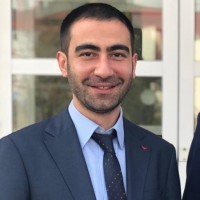
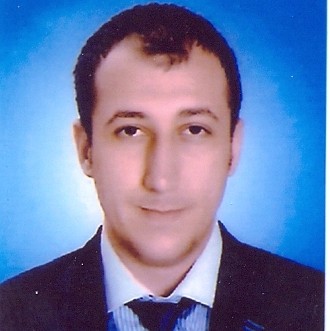
Dr. Aydın ÜNAL 1988 Antalya ili Kaş ilçesinde dünyaya gelmiştir. İlk ve ortaöğretimini Antalya ili Elmalı ilçesinde ve lisans eğitimini ise Balıkesir Üniversitesi Turizm İşletmeciliği ve Otelcilik Yüksekokulu Seyahat İşletmeciliği Bölümü’nde tamamlamıştır (2009). Yüksek lisans derecesini Sakarya Üniversitesi Turizm İşletmeciliği Anabilim Dalı’nda 2011 yılında Yrd. Doç. Dr. Oğuz TÜRKAY danışmanlığında “Örgütsel Güvenin Duygusal Emeğe Etkisi: İstanbul’da Yerleşik Dört ve Beş Yıldızlı Otel İşletmeleri Üzerine Bir Araştırma” başlıklı teziyle ve doktora derecesini de Balıkesir Üniversitesi Turizm ve Otel İşletmeciliği Anabilim Dalı’nda 2018 yılında Prof. Dr. Necdet HACIOĞLU danışmanlığında “Turistlerin Destinasyon Seçimi Öncesi Beklentileri ve Satın Alma Sonrası Değerlendirmeleri: Kapadokya Örneği” başlıklı teziyle almıştır. 2010 yılında Kırklareli Üniversitesi Pınarhisar Meslek Yüksekokulu’nda öğretim görevlisi olarak başladığı akademik kariyerine yine aynı kurumda Doç. Dr. olarak 2022 yılına kadar devam etmiştir. 2022 yılının mart ayında Sinop Üniversitesi Turizm Fakültesi Rekreasyon Yönetimi Bölümü’ne Doçent olarak atanan Dr. Aydın ÜNAL evli ve bir çocuk babasıdır. Dr. ÜNAL’ın temel çalışma alanları turizm pazarlaması, destinasyon pazarlaması ve turizm işletmeleridir.






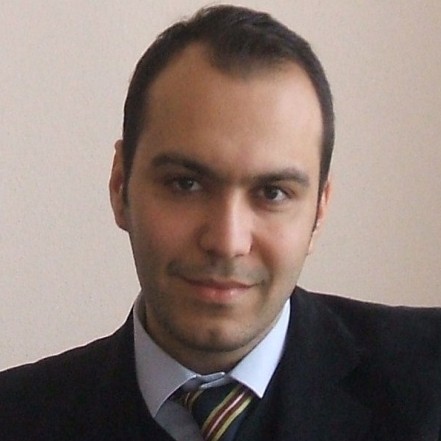





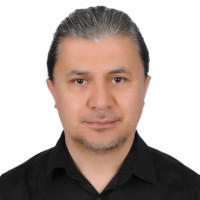
1995 yılında Çukurova Üniversitesi İİBF Turizm İşletmeciliği Bölümünden mezun oldu. 2001 yılına kadar hizmet ve otelcilik sektöründe çalıştı. 2004 yılında Yüksek lisans ve 2007 yılında doktorasını araştırma görevlisi olarak tamamladı. 2009 yılından beri Mersin Üniversitesi Turizm Fakültesi bünyesinde öğretim üyesi olarak görev yapmaktadır. 2016 yılından beri Rekreasyon ve Rekreasyon yönetimi alanında pozitif psikoloji temelli araştırmalar, projeler yürütmekte ve dersler vermektedir.




 Web
Web



Aim & Scope
Tourism and Recreation (TO&RE) is a peer-reviewed journal that aims to contribute to the world of science by publishing academic and scientific studies in an ethical, qualified and original framework, scanned in national/international other field indexes, and publishes at least two issues a year (June-December) electronically.
Tourism and Recreation (TO&RE) is a peer-reviewed journal, and the articles are published after evaluation by at least two blind reviewers. Turkish and English publications are accepted for the journal. Authors submitting a study to the journal must have their study never been published elsewhere. When authors submit study, they are deemed to have agreed their copyrights. Studies are published through the plagiarism program. The journal is free and there is no article submission or publishing fee.
Tourism and Recreation publish articles related to tourism science such as tourism management, recreation, tourism marketing, management in tourism, tourist guiding, travel management, transportation services in tourism, recreation management, gastronomy and culinary arts, culture and tourism, tourism geography, touristic public relations.
Author Guidelines
2. Tourism and Recreation (TO&RE) aims to contribute to the knowledge of tourism science by publishing national and international scientific studies in the field of tourism.
3. Tourism and Recreation (TO&RE), tourism management, recreation, recreation management, tourism marketing and planning, management and organization in tourism, tourist guiding, travel management, recreation management, gastronomy and culinary arts, culture and tourism, tourism geography publishes studies related to tourism science such as promotion in tourism, public relations in tourism, accounting and finance in tourism enterprises, technology studies in tourism.
4. Articles submitted to the journal must not have been published elsewhere or sent for publication.
5. In publications derived from graduate theses, the thesis must have been defended in the last 3 years to be calculated from the acceptance date of the thesis according to the submission date of the article. In addition, as a footnote to this situation, “This study was carried out by Prof. Dr./Assoc. Dr./Dr. Under the supervision of a faculty member …………. It is derived from the master's/doctorate thesis titled "….." and the thesis number 123456, completed by (Thesis number will be taken from YÖK thesis center).
6. Studies that have previously been presented as abstract and extended abstract papers are accepted, and the articles derived from the papers must be submitted within the last 3 years, to be calculated from the submission date. In addition, as a footnote to this situation, “This article was presented as an oral presentation at the congress/conference/symposium named ……………… held in Ankara between 3-5 April 2020 and published in the congress/conference/symposium proceedings book “……..” It is an expanded version of the statement titled. should be specified as.
7. Articles can be written in Turkish or English. Sentences should be written in accordance with grammar and spelling rules. For spelling and punctuation rules in Turkish articles, the Turkish Language Association's Current Turkish Dictionary and/or Great Turkish Dictionary and Turkish Spelling and Spelling Guide should be used. For English articles, the resources of Longman Dictionary of Contemporary English, Oxford Advanced Learner's Dictionary, Cambridge Advanced Learner's Dictionary can be used.
8. The title of the articles sent to Tourism and Recreation (TO&RE) should not exceed 18 words. If the submitted articles are in Turkish, English title, abstract and keywords should be added. If it is in English, Turkish title, abstract and keywords should be added. In the article writing template, this order is presented to the author(s) ready. It will be sufficient for the author(s) to add their articles in accordance with the order in the article writing template.
9. In the articles submitted to Tourism and Recreation (TO&RE), the author(s) should provide appropriate and short keywords covering the main topics of the article. The number of keywords should be at least 3 and at most 5.
10. Writing rules are specified on the "Article Writing Template" prepared for the articles sent to Tourism and Recreation (TO&RE). In addition, the author(s) must comply with the study content titles (eg introduction, theoretical framework/literature review, method, findings, conclusion and suggestion) on the article writing template. When uploading the article to the system, the author(s) must adapt their article to the article writing template and send it. Articles submitted to the journal should be submitted in Microsoft Word format.
11. The abstract of the articles sent to Tourism and Recreation (TO&RE) should not exceed 250 words. Articles that do not comply with this rule are sent back to the author(s) at the pre-control stage. If the necessary correction is not made by the author(s), the article will be rejected.
12. Along with the articles sent to the journal for publication, the author(s) contact information such as name and surname, title, institution and e-mail address should be entered into the web-based system. Since there is double-blind (confidential) refereeing practice in the journal, there should be no information about the author(s) in the article and in the name of the word document.
13. In the articles published in Tourism and Recreation (TO&RE), the use of "Orcid Number" is mandatory for all authors in accordance with international acceptance.
14. In the articles sent to Tourism and Recreation (TO&RE), there is no author information and should be given separately under the name of "Title Page" when uploading the article to the system. On the title page, the Turkish and English name of the study, the name and surname of the author(s), title, institution name, unit name, institutional e-mail address, orcid number should be included. In addition, if there is any detail about the article, it should be added to the title page.
15. Author(s) should follow the APA 7 Rules (American Psychological Association) for in-text citation and bibliography of their articles. The bibliography should be given in alphabetical order according to the surname of the first author, in accordance with the bibliography rules. Examples for bibliography and in-text citation are provided in the article writing template for the author(s). In addition, the same examples are given at the bottom of the spelling rules page. Articles that are incompatible in the bibliography are returned to the authors for correction during the pre-control process.
16. It is recommended that the articles be limited to not exceeding 8,000 words. For articles that exceed the limits, permission belongs to the editor.
17. In the studies submitted to the journal, the bibliography should be disabled in the similarity report and the total similarity amount should be at most 20% in order to prevent plagiarism and improper citations. Additionally, the plagiarism rate from each publication should not exceed 1%. When detecting plagiarism in the Ithenticate program, references and quotations must be marked as excluded.) Manuscripts that do not meet these criteria are directly rejected as a result of Editorial review. The author(s) must take the complete plagiarism report from Ithenticate program and upload it to the system as an additional file with the article. Legal responsibility for plagiarism rests entirely with the author(s). While the similarity rate in publications produced from graduate theses should not exceed 20% in total, it should not exceed 10% from the primary source and 1% in other single publications.
18. Articles submitted to Tourism and Recreation (TO&RE) are first evaluated by the Editorial Board. Articles that do not comply with the purpose and scope of the journal, Turkish and English language and expression rules, do not have originality value and do not comply with publication policies are rejected.
19. Articles that do not comply with the writing principles are sent back to the author during the pre-control process, indicating errors/deficiencies. The author is expected to send it by rearranging it within 15 days. Articles that exceed 15 days to be sent and articles that do not comply with the journal writing rules are rejected.
20. In articles with more than one author, one of the authors should be indicated as the corresponding author. In cases where a corresponding author is not specified, the first author is considered as the corresponding author.
21. In accordance with the publication policies of Tourism and Recreation (TO&RE), authors who want to withdraw their articles after the pre-control phase have to submit their withdrawal requests to the editor via the system, they uploaded the article. The editor reviews the retraction notice and returns to the author(s) within 15 days at the latest. Since the author(s) have transferred the copyrights of the articles to Tourism and Recreation (TO&RE) during the submission of their work, they cannot send their work to another journal for evaluation unless the withdrawal request is approved.
22. “Copyright Transfer Form” must be filled in by all authors/authors. After this form is signed, it should be uploaded to the system as an additional file in the form of a photo or scanned.
23. The author(s) are responsible for the opinions expressed in the articles. All scientific and legal responsibilities in terms of language, style, scientific ethics and content of the published article belong to the author(s) and do not bind the Journal Management. No royalties are paid to the author(s) whose articles are published.
24. All publication rights of the articles accepted and published in the journal in written and electronic media belong to Tourism and Recreation (TO&RE). In case of citing the articles published in the journal, it is obligatory to indicate the source.
25. Tourism and Recreation (TO&RE) does not charge the author(s) for publication at any stage. It also does not accept sponsorship and advertising offers.
26. For articles that use measurement tools (questionnaire, test, scale, interview, observation, picture, drawing, video, film, sound recording, etc.) that require Ethics Committee approval, an ethics report must be obtained from the University Ethics Committee. This report should be uploaded to the system as a separate file from the place where the article was uploaded. Responsibility in this regard belongs to the responsible author of the article. Ethics committee approval document should be uploaded as an additional file while uploading the study to the system. In addition, it should be stated that ethical rules are followed by specifying the information about the permission (name of the board, date and number) on the last page of the article and in the method section.
27. Privacy Statement: All data (personal information such as name, e-mail addresses) to be entered in the Tourism and Recreation (TO&RE) journal system can only be used for the journal. This data is not used for any other purpose and is not shared with third parties.
28. An extended abstract not exceeding 1000 words must be added to the end of the publications sent to the journal. Detailed information about the extended abstract is included in the article writing template.
29. Tables, figures and other images in the publications sent to Tourism and Recreation must be uploaded to the system in a separate file, the example of which is attached.
30. The decision authority on matters not mentioned here belongs to the Editorial Board.
The article to be sent must be uploaded with the following files:
* Full-text article with no author name (file name, author names should not be like "uzeyir-kement.doc", it can be like "TO&REtammetin.doc" or "article-full.doc")
- Click to download the article writing template.
* Table, figure and images file (Tables, figures and other images used in the study should be placed and sent in this file separately from the full text.)
- Click to download the title page.
* Title Page (Article name (Turkish-English), for each author; author's name, title, institution and unit information, e-mail address and Orcid number)
- Click to download the title page.
* Copyright form (signed and filled in by all authors)
- Click to download the Copyright form.
* Similarity report (it should be reviewed with one of the similarity programs (iThenticate), the similarity rate should not exceed 20% excluding references. Additionally, the plagiarism rate from each publication should not exceed 1%. When detecting plagiarism in the Ithenticate program, references and quotations must be marked as excluded.).
* Ethics committee report (requisite)
* Declaration that no ethics committee permission is required
- Click download the no ethics committee permission is required form.
Ethics committee approval is required within the framework of the article "For research conducted in all disciplines that require ethics committee approval (ethics committee approval must be obtained, this approval must be specified and documented in the article") in the 2021 TR DIZIN Journal Evaluation criteria.
Ethics committee approval document should be uploaded as an additional file while uploading the study to the system. In addition, it should be stated that ethical rules are followed by specifying the information about the permission (name of the board, date and number) on the last page of the article and in the method section.
Ethical Principles and Publication Policy
Dear Researchers,
Tourism and Recreation, believing that it contributes to the publication of an article and to the development of a consistent and respected information network, invites authors and referees to fulfill the following ethical conditions. Tourism and Recreation takes into account the Higher Education Institutions Scientific Research and Publication Ethics Directive, the recommendations of the ICMJE (International Committee of Medical Journal Editors) and the international standards put forward by COPE (Committee on Publication Ethics) for editors and authors. The duties given below for the editors, authors and referees have been prepared by following the COPE (Code of Conduct for Journal Editors). In Tourism and Recreation, the publications whose peer-review process is completed are accessible. No fee is charged from the authors in any process, from the submission process to the publication process.
1. Duties of Editors
Publication Decisions: The editor of the journal is responsible for deciding which of the articles submitted to the journal will be published. The validity of the study in question and its importance to researchers and readers are always the basis for such decisions. The editor may consult with other editors or referees while making these decisions.
Peer review: The editor ensures that the peer review process is fair, impartial and timely. Research articles are typically reviewed by at least two external and independent reviewers, and the editor may seek additional comments as needed. The editor selects reviewers with appropriate expertise in the relevant field and avoids selection of fraudulent and biased reviewers.
Impartiality: The editor evaluates articles for their intellectual content, regardless of the authors' race, gender, sexual orientation, religious belief, ethnicity, nationality, or political philosophy.
Confidentiality: The editor will maintain the confidentiality of all materials submitted to the journal and all communications with the referees, unless otherwise agreed with the respective authors and referees. The editor will keep the identities of the referees confidential unless the referees agree to reveal their names. Materials published in articles may not be used in the editor's own research without the express written consent of the author. Information or ideas obtained during the evaluation process are kept confidential and cannot be used for personal advantage.
Conflicts of Interest: Editors should avoid evaluating articles with conflicts of interest arising from relationships.
2. Responsibilities of the Referees
Contribution to the Editorial Process: Peer review helps the editor make editorial decisions and can assist the author in improving the manuscript through editorial communications with the author. Peer review is central to the scientific method. Reviewers are often asked to treat authors and their work as they would like to be treated, and to follow good review etiquette. Any selected reviewer who feels unqualified to review the research reported in the article or knows that it is impossible to review immediately should notify the editor and decline to participate in the review process.
Confidentiality: All manuscripts received for review should be treated as confidential documents. Reviewers should not share reviews or information about the article with anyone or communicate directly with the authors without the permission of the editor. Materials in a submitted manuscript should not be used in a referee's own research without the express written consent of the author. Privileged information or ideas obtained through peer review should be kept confidential and not used for personal advantage.
Sensitivity to Ethical Issues: The reviewing reviewer should be alert to potential ethical issues in the article and bring them to the editor's attention, including any significant similarities or overlaps between the article under review and other published articles of which the reviewer has personal knowledge.
Objectivity: Reviews of submitted articles should be done impartially. Referees should clearly express their views with supporting arguments.
3. Duities of Section Editors
* The editor regarding the publication received from the secretariat makes the necessary checks and sends the article to the section editor within the scientific scope of the study.
* The section editor examines the incoming article, and if it does not find it suitable for the journal criteria, field or scientifically sufficient, it may reject the article by stating the reasons in detail. If it deems it appropriate, it appoints two referees who are experts in the field for the publication.
* If one of the referees rejects the article, it is sent to the third referee.
* If the article is rejected by two referees, the article will be REJECTED by the section editor.
* If the article is corrected by two referees, the section editor sends the article to the author as a minor/major revision in the context of the referee reports.
* If additional files have been sent by the referees, they are checked, if referee information is visible in the files, they are deleted, and the author is asked by the section editor to make revision in a different color and to prepare a revision file for the referees and upload it separately.
* After the revision received from the author, the article is made visible for the referees who want to see it again and is re-sent to the referees in question.
* If the answer from the referee is positive, the publication is sent to the language editor, taking into account the language in which it was written.
* If the language editor requests any corrections, the article is re-sent to the author.
* A spelling editor is assigned to the article with its final version received from the author.
* If the spelling editor requests revision, a revision is requested from the author.
* The completed article is reviewed for the last time by the section editor and if the article is deemed appropriate, it is accepted for publication.
4. Author Rights
• Exclusion of Certain Referees from the Evaluation Process:
The author(s) may determine the referees whose work is not submitted for conflict of interest or ethical reasons.
• The Editor does not send reviews to the following referees:
• The author(s) previously published a collaborative work,
• Assisted in the pre-reading of the author(s) works,
• Will benefit financially from the publication of the study,
• Referees who work in the same institution with the author (in the same department at universities).
* In order to be published for the purpose of articles, all resources in the manuscript uploaded to Tourism and Recreation through the DergiPark system were cited in line with scientific research methods and ethical principles.
* If the study belongs to more than one person, all authors in the study have an academic and scientific direct and joint contribution.
* This manuscript is an original manuscript of the author(s).
* All the authors saw the final version of the submitted manuscript and approved the results.
* The manuscript has not been sent to somewhere to be published in any way and / or accepted for publication and / or it has not been awaiting to be published in another journal. will not be sent to the process.
* There was no ethical violation regarding the subject (s) used in the study, and all the data collection methods were used according to scientific ethical principles. (Author(s) must obtain an ethics committee certificate for their articles that require ethical permission from their institution)
* All processes regarding the evaluation of the manuscript (referee reports, editor notes, etc.) will not be shared / shared with third parties.
* All kinds of publishing rights of articles accepted for publication belong to the institution that publishes the journal.
* Thoughts and suggestions in the articles are entirely the responsibility of the authors.
* If the study is an abstract presented earlier in a scientific meeting or a shorter version of this paper, this is stated in the article.
* The author(s) agrees and undertakes to transfer financial rights on this manuscript, in particular, to any public transmission rights, including processing, reproduction, representation, printing, publishing, distribution and transmission via the Internet, for unlimited use to the Tourism and Recreation.
* Regarding the manuscript, Tourism and Recreation and its committees do not have any responsibility for the claims to be requested by third parties due to copyright infringement, and all responsibility belongs to the author(s).
* Although there is no criminal or illegal statement in the publication, no illegal methods were used during the research, all legal permissions related to the study must be obtained and ethical rules must be followed.
* In all matters not mentioned above regarding the suitability of the study in terms of scientific research and publication ethics, the provisions of the “Higher Education Institution Scientific Research and Publication Ethics Directive” have been acted and in addition, principles published by the Committee on Publication Ethics (COPE) have been adopted as open access to ethical duties and responsibilities.
* Author/s are requested to fill in and upload the "copyright form" when uploading publications to the system.
Duties and Rights of Authors
Reporting Standards: Authors should provide an accurate description of the work performed as well as an objective discussion of its significance. The data must be accurately represented in the article. The work should contain sufficient detail and references to allow other authors to cite it. Fraudulent or deliberate misrepresentations constitute unethical behavior and are unacceptable.
Data Access and Retention: Authors may be required to provide research data and/or comply with the journal's open data requirements. Authors should be prepared to make such data available to the public whenever possible and be prepared to retain such data for a reasonable number of years after publication.
Authenticity: Authors should ensure that they are writing completely original works and that if authors have used the work and/or words of others, it is appropriately cited and permission is sought when necessary. Authors should avoid any form of plagiarism.
Multiple or Simultaneous Publication: Submitting the same article to more than one journal at the same time constitutes unethical behavior and is unacceptable. Generally, an author should not submit a previously published article for consideration in another journal.
Article Authorship: Authorship should be limited to those who have made significant contributions to the scope, design, execution or interpretation of the reported work. Anyone who has made significant contributions should be listed as co-authors. The authors take collective responsibility for the work. Each author is responsible for ensuring that questions regarding the accuracy or completeness of any part of the work are appropriately investigated and resolved.
Statement of Support: All sources of financial support for the conduct of the study and/or the preparation of the article and, if any, the role of the sponsor in the study design should be explained. In addition, potential conflicts of interest should be disclosed at the earliest possible stage.
Reporting Fundamental Errors: When an author notices a material error or inaccuracy in his or her published work, it is the author's obligation to notify the journal editor or publisher immediately and to cooperate with the editor to retract the article if deemed necessary by the editor.
Change of Author: Any change in the list of authors cannot be accepted unless a clear reason is given to the Editor. When a change in authorship is required, a clear reason for the change and written consent (a signed letter) should be communicated to the journal editor.
Withdrawal: The author(s) may withdraw their unpublished works while they are in the pre-evaluation process. However, the authors cannot send their work to another journal for evaluation, unless the request for withdrawal of the studies whose copyrights have been transferred to the Tourism and Recreation is approved by the editorial board.
Objection to Referee Reports and Editorial Board Decisions: Author(s) have the right to object to referee reports and editorial decisions at any time and in any situation. In such and similar cases, the Author(s) are requested to report their objections with their justifications. Editors may initiate a new review process if deemed necessary in case of objections.
Saving for published papers: Published articles and reviews are copyrighted in Tourism and Recreation. However, the Author(s) may submit their requests regarding the use of their work to the Journal Editor.
In the studies submitted to Tourism and Recreation, the following processes regarding publication ethics should also be considered:
The author (s) who have uploaded / submitted a study for the purpose of publishing to Tourism and Recreation, are considered to have read all the above-mentioned issues and undertake / accept them by their own will.
Price Policy
Tourism and Recreation, no fee (article processing fee) is collected from the authors before, during or after publication.
Indexes











Journal Boards
Editörler

Alan Editörleri
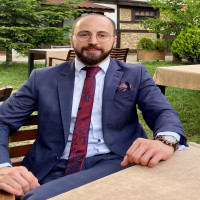
Dr. Mustafa ÜLKER, 30 Haziran 1992'de Antalya'da doğmuştur. İlk ve orta öğretimini Antalya'da tamamlamıştır. Lise öğrenimini Antalya Turizm Otelcilik ve Turizm Meslek Lisesi'nde tamamlayan (2010) Ülker, Akdeniz Üniversitesi Turizm Fakültesi Yiyecek ve İçecek İşletmeciliği bölümünden mezun olmuştur (2014). Lise ve üniversite yıllarında yurtiçinde ve yurtdışında birçok konaklama işletmesi mutfağında ve restoranında stajlar yaptıktan ve çalıştıktan sonra Erciyes Üniversitesi Turizm Fakültesi'ne Araştırma Görevlisi olarak atanmıştır (2015). Yüksek lisansını Turizm İşletmeciliği Anabilim Dalında tamamlayan (2017) Ülker, Gazi Üniversitesi Sosyal Bilimler Enstitüsü Turizm İşletmeciliği Anabilim Dalı'nda doktor unvanını almıştır (2022). Halen Erciyes Üniversitesi Turizm Fakültesinde Dr. Öğr. Üyesi olarak çalışmaktadır. Turizm ve gastronomi alanlarında ulusal ve uluslararası çalışmalarını yürüten Ülker'in ulusal ve uluslararası birçok yemek yarışmasından da ödülleri bulunmaktadır.


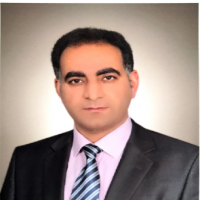
Dr. Erkol Bayram is currently Professor and vice-dean in tourism faculty, department of tour guiding, University of Sinop, Sinop, Turkey. Dr. Erkol Bayram has worked as an internal trainer and teacher in the tour guiding arena. Her doctorate is in Tourism Management from the Sakarya University, Turkey, and she completed her dissertation research on Tour Guiding in Turkey. Her core subjects are Tourism, tour guiding, tourism policy and Planning, women studies. Erkol Bayram has also worked as a professional tour guide in the tourism sector. She has many book chapters in the international arena and published her books as an editor and author in the national arena. She has been invited for many talks/lectures/ panel discussions by different Universities and countries. She has a member of eminent journals in advisory board editor and she published articles in tourism and Management areas.

Danışma Kurulu
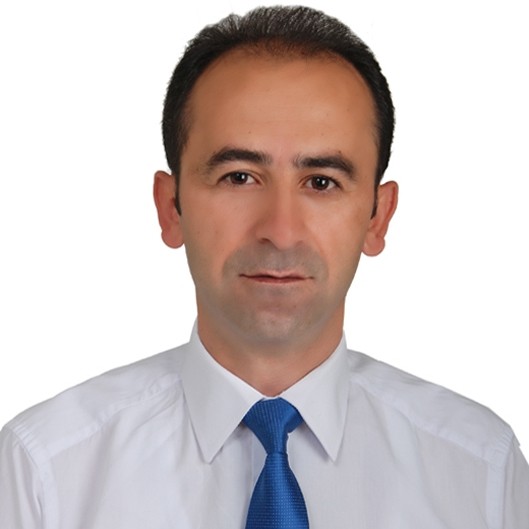
Muhsin Halis, lisans eğitimini Atatürk Üniversitesi İşletme Bölümü’nde tamamlamıştır. Yüksek
lisans derecesini 1995 yılında, Atatürk Üniversitesi Sosyal Bilimler Enstitüsü Yönetim ve Organizasyon
programında "Çalışma ortamı ve iş çevresine ilişkin ergonomik faktörlerin analizi ve bir uygulama"
başlıklı teziyle Prof. Dr. Feyzullah Eroğlu danışmanlığında almıştır. Doktora çalışmalarını ise 1998
yılında Cumhuriyet Üniversitesi Sosyal Bilimler Enstitüsü İşletme programında "Toplam kalite
yönetimi uygulamalarında iç müşteri tatminini etkileyen faktörler ve bir uygulama" konulu teziyle Prof.
Dr. İbrahim Yıldırım danışmanlığında tamamlamıştır. Akademik kariyerine 1994 yılında Cumhuriyet
Üniversitesi’nde araştırma görevlisi olarak başlayan Muhsin Halis, 1999-2006 yılları arasında Gaziantep
Üniversitesi’nde Doçent olarak görev yapmıştır. 2006 yılında Sakarya Üniversitesi’nde Profesör
unvanını alarak 2016 yılına kadar burada çalışmıştır. Bu süreçte Kırgızistan-Türkiye Manas Üniversitesi
(2011-2013), Yüzüncü Yıl Üniversitesi (2013-2014), Kastamonu Üniversitesi (2013-2016) ve Bolu
Abant İzzet Baysal Üniversitesi’nde (2018-2021) dekanlık görevlerini yürütmüştür. Halen Kocaeli
Üniversitesi İşletme Fakültesi’nde dekanlık görevine devam etmektedir. Muhsin Halis, ulusal ve
uluslararası birçok bilimsel araştırma projesinde yer almıştır. 60’tan fazla uluslararası ve ulusal makale,
yine 60’tan fazla tebliğ ve 50’nin üzerinde kitap ve kitap bölümü yayınlayan Halis, bunun yanı sıra
birçok akademik faaliyette bulunmuştur.

Dil Editörleri


Turizm işletmeciliği anabilim dalından hem lisans hem de yüksek lisans derecesi aldı. Halen doktora eğitimine devam ediyor. Özellikle turizm pazarlaması ve nöroturizm ile ilgileniyor.
Mizanpaj Editörleri
Yazım Editörleri
Son Okuyucu
Sekreterya

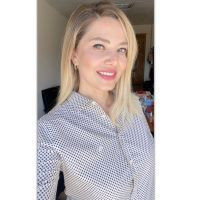
Doktora: Ankara Hacı Bayram Veli Üniversitesi, Lisansüstü Eğitim Enstitüsü, Rekreasyon Yönetimi, Türkiye (2021 - Devam Ediyor)
Yüksek Lisans: Van Yüzüncü Yıl Üniversitesi, Sosyal Bilimler Enstitüsü, Turizm İşletmeciliği, Türkiye (2019 - 2021)
Lisans: Balıkesir Üniversitesi, Turizm Fakültesi, Turizm Rehberliği Bölümü, Türkiye (2014 - 2018)
Pedagojik Formasyon: Balıkesir Üniversitesi, Necatibey Eğitim Fakültesi, Türkiye (2018)
Articles published by Tourism and Recreation are licensed under the Creative Commons Attribution-NonCommercial-NoDerivatives 4.0 International Lisence